

Digital Access: Empowerment Without Gaps
Welcome to the Digital Goodie Bag for the Digital Access: Empowerment Without Gaps event
Digital Experience Maturity Index Survey 2026
The DXMI measures how ready government platforms are and how well they meet user needs. Your input helps us make these services better.
Take the SurveyTakes about 10 minutes.
Event Agenda
Digital Inclusion Program
Digital Inclusivity Department, Digital Government Authority
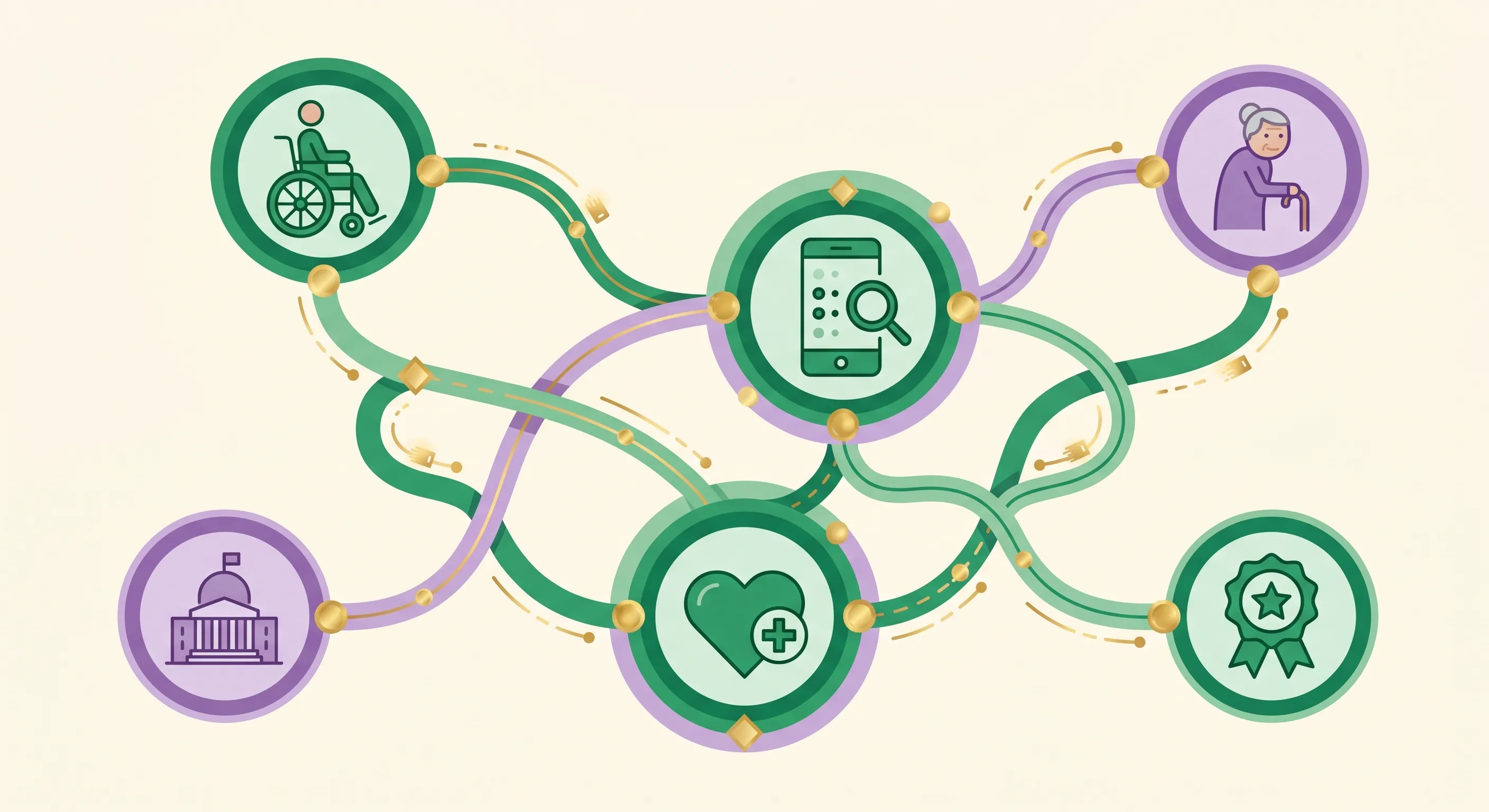
The Digital Government Authority launched the Digital Inclusion Program together with the Ministry of Human Resources and Social Development and the Authority for the Care of Persons with Disabilities. The program aims to increase independent and safe use of government digital services by persons with disabilities and the elderly.
General Authority for Statistics
Strategic Objectives
Better Digital Solutions
Finding ways to increase service usage among target groups
Government Capacity Building
Training staff and building an inclusivity culture across digital transformation
Service Evaluation
Assessing government products and advising on usability
Easier Compliance
Raising adoption of international accessibility standards (WCAG)
Community Involvement
Including beneficiaries in designing policies and products
Encouraging Initiatives
Pushing entities to deliver services that work for everyone
Key Initiatives
- Digital Experience Maturity Index (annual measurement)
- Accessibility reference guides
- Digital Inclusion Lab for assistive technology testing
- Dedicated Amer center services
- Digital skills training program "Qudratak"
The "Muneer" product won the Collaborative Innovation Award at the 2024 Digital Technology Forum.
Web Accessibility Guideline for Digital Channels
A comprehensive guide covering W3C accessibility standards and WCAG 2.2 guidelines, with 12 assistive technologies for serving persons with disabilities and elderly citizens across government digital channels.
Digital Government Authority — Version 2.0 — DGA-1-2-4-203
View the Accessibility Guideline





Digital Accessibility Booklet
The basics you should know
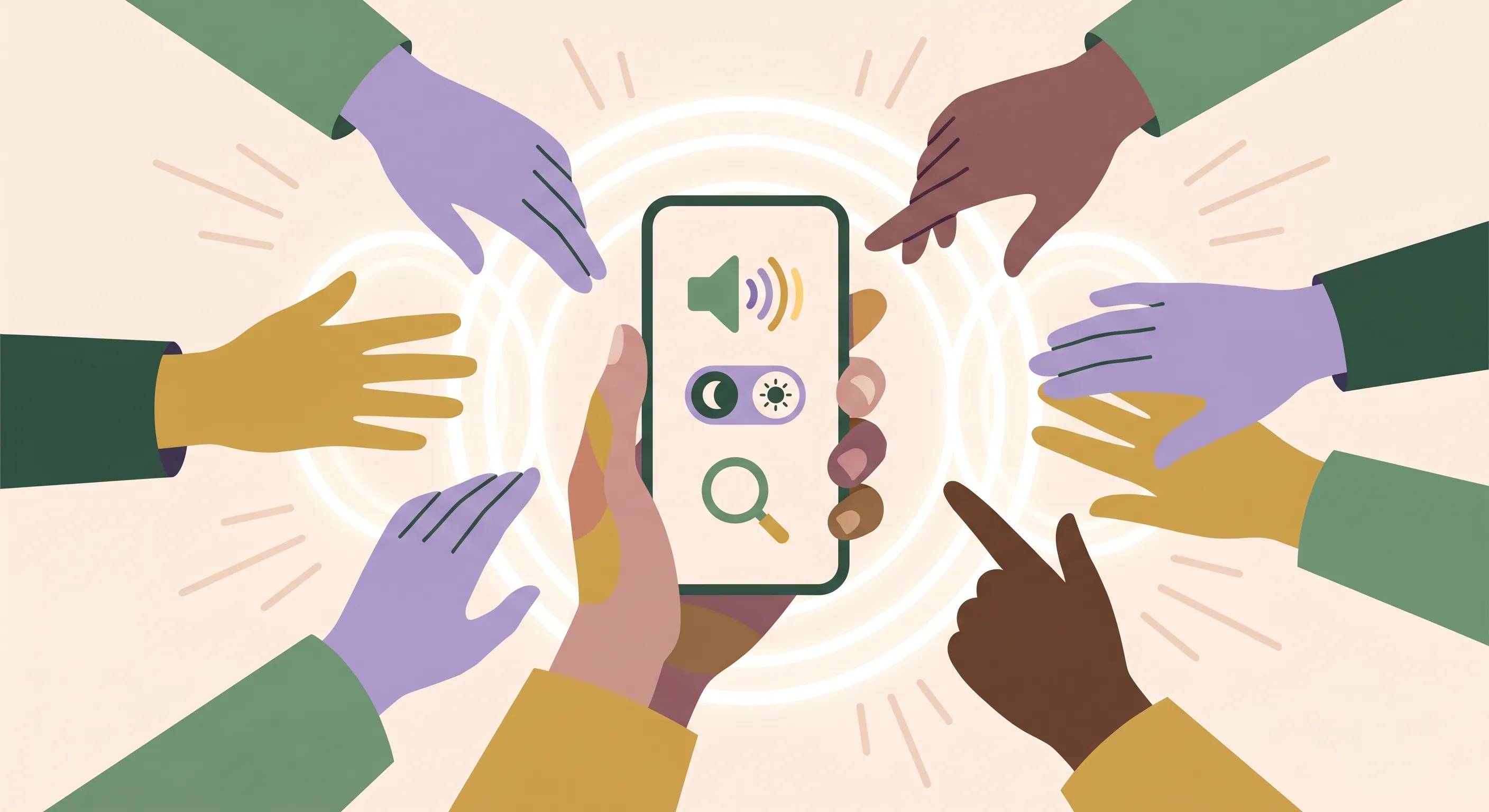
Digital accessibility means anyone can use your website or app, regardless of visual, auditory, motor, or cognitive ability. It is not about adding special features for a specific group. It is about removing barriers from the design itself. When you build without barriers, you reach every user by default.
Try it yourself
Try navigating this page with your keyboard only: Tab to move between elements, Enter to activate, Escape to close.
The 2024 WebAIM Million study found that 94.8% of top homepages have WCAG failures, averaging 51 errors per page. The same six problems show up everywhere: low contrast text, missing alt text on images, links with unclear purpose, form fields without labels, broken heading hierarchy, and elements that cannot be reached by keyboard. This is not an edge case. It is the norm.
Screen readers have two main modes. Browse mode lets you read content and move through the page. Focus mode activates when you enter a form or interactive widget. Blind users navigate with single-letter shortcuts: H jumps between headings, K between links, E between form fields. Every study confirms that headings are the primary way blind users understand page structure and find what they need.
Try it yourself
Install NVDA (it is free) and try browsing a website with your eyes closed. You will learn more in ten minutes than in hours of reading.
WCAG rests on four principles, shortened to POUR. Perceivable: users can see, hear, or touch the content. Operable: users can interact with every element using any input method. Understandable: users can follow the content and figure out how the interface works. Robust: the content works with current and future assistive technologies. Saudi Arabia follows WCAG 2.1 Level AA.
Read the WCAG standards from W3C